The Government of India has introduced the Prime Minister Dhan-Dhaanya Krishi Yojana (PM DDKY) as a major initiative to improve agriculture and allied activities in selected districts across the country.
The scheme focuses on districts where agricultural productivity, cropping intensity and access to agricultural credit need improvement. Instead of providing a fixed cash payment directly to every farmer, PM Dhan-Dhaanya Krishi Yojana brings together existing government schemes and resources to address the specific agricultural needs of each selected district.
PM Dhan-Dhaanya Krishi Yojana
The programme covers 100 districts across India and is expected to benefit around 1.7 crore farmers.
PM Dhan-Dhaanya Krishi Yojana was initially announced in the Union Budget 2025-26. The Union Cabinet approved the programme on July 16, 2025, for a period of six years beginning from financial year 2025-26.
The Prime Minister formally launched the scheme on October 11, 2025.
The programme focuses on improving farm productivity, irrigation, crop diversification, sustainable agriculture, post-harvest storage and access to both short-term and long-term agricultural credit.
Related Posts
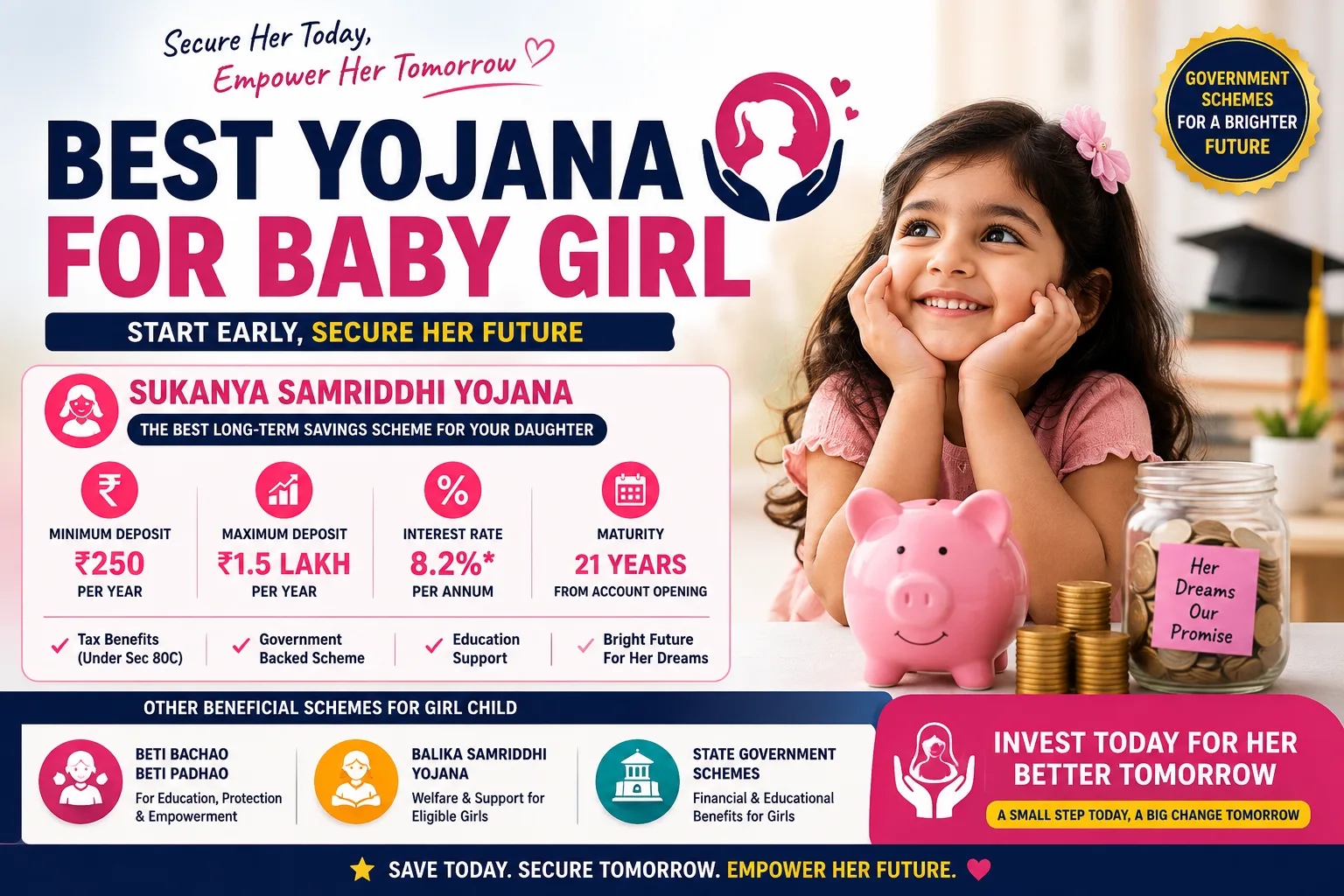
Best Government Yojana for Baby Girl in India 2026: Secure Your Daughter’s Future from Just ₹250
Best Government Yojana for Baby Girl in India 2026: Secure Your Daughter’s Future from Just ₹250

Here is everything farmers need to know about PM Dhan-Dhaanya Krishi Yojana in 2026.
PM Dhan-Dhaanya Krishi Yojana 2026 – Overview
Details | Information |
|---|---|
Scheme Name | Prime Minister Dhan-Dhaanya Krishi Yojana |
Short Name | PM DDKY |
Announced In | Union Budget 2025-26 |
Cabinet Approval | July 16, 2025 |
Launched | October 11, 2025 |
Implementation Period | 6 Years |
Starting Financial Year | 2025-26 |
Districts Covered | 100 Districts |
Expected Beneficiaries | Around 1.7 Crore Farmers |
Annual Outlay | ₹24,000 Crore |
Central Schemes Converged | 36 Schemes |
Departments Involved | 11 Departments |
Main Focus | Agriculture & Allied Sectors |
Major Areas | Productivity, Irrigation, Storage, Diversification & Credit |
What is PM Dhan-Dhaanya Krishi Yojana?
Prime Minister Dhan-Dhaanya Krishi Yojana is a district-focused agricultural development programme.
It draws inspiration from NITI Aayog's Aspirational Districts Programme, but PM DDKY specifically focuses on agriculture and allied sectors.
India has made significant progress in agricultural production, but farming conditions vary considerably between districts.
Some districts have high productivity and good irrigation, while farmers in other areas continue to face problems such as low crop productivity, limited irrigation facilities, inadequate storage infrastructure and lower access to institutional agricultural credit.
PM Dhan-Dhaanya Krishi Yojana aims to address these local gaps.
Instead of implementing exactly the same intervention everywhere, district-level plans are prepared based on local agricultural conditions and requirements.
₹24,000 Crore Annual Outlay
PM Dhan-Dhaanya Krishi Yojana has an annual outlay of ₹24,000 crore and is planned for six years.
However, farmers should understand how this money works.
The ₹24,000 crore is not an amount that will simply be divided among 1.7 crore farmers and transferred to their bank accounts.
The programme works largely through the convergence of existing government schemes.
A total of 36 existing Central Government schemes from 11 departments are being brought together for coordinated implementation in the selected districts.
State government schemes and local partnerships, including appropriate private-sector participation, can also contribute to district development plans.
The idea is to ensure that existing agricultural programmes work together more effectively instead of operating separately.
How Were the 100 Districts Selected?
The Government has identified 100 districts for the programme.
District selection is based primarily on three important agricultural indicators:
1. Low agricultural productivity
Districts where crop productivity is relatively low receive special attention.
2. Low cropping intensity
Cropping intensity indicates how effectively agricultural land is being used for cultivation during the year.
3. Lower agricultural credit disbursement
Access to affordable institutional credit is important for purchasing seeds, fertilizers, machinery and other agricultural inputs.
The distribution of districts among states and Union Territories also takes factors such as net cropped area and operational holdings into consideration.
The Government has provided for representation across states, with at least one district selected from each state.
Main Objectives of PM Dhan-Dhaanya Krishi Yojana
The scheme has five major objectives.
1. Increase Agricultural Productivity
Increasing farm productivity is one of the biggest priorities of PM DDKY.
Farmers may be supported through better implementation of existing programmes related to technology, seeds, farming practices, extension services and other agricultural interventions.
The ultimate objective is to help farmers produce more efficiently from available agricultural resources.
2. Promote Crop Diversification
Depending too heavily on one crop can increase financial and environmental risks.
The programme therefore promotes crop diversification and sustainable agricultural practices.
District plans can be developed according to local climate, soil, water availability and agricultural potential.
3. Improve Irrigation Facilities
Reliable irrigation can make a major difference to farm productivity.
Farmers who depend heavily on rainfall face greater uncertainty, especially when rainfall is delayed or uneven.
PM DDKY therefore aims to improve irrigation facilities in selected districts by bringing together relevant government interventions.
Better water management and conservation are also important parts of the district planning process.
4. Improve Post-Harvest Storage
Producing a good crop is only one part of a farmer's challenge.
After harvesting, inadequate storage can lead to losses or force farmers to sell their produce quickly.
The scheme aims to improve post-harvest storage facilities at panchayat and block levels.
District plans can identify infrastructure gaps involving facilities such as warehouses, cold storage and farm-gate processing.
Addressing these gaps can help reduce post-harvest losses and strengthen the agricultural value chain.
5. Improve Access to Agricultural Credit
Farmers frequently need financing for seeds, fertilizers, machinery, irrigation and other investments.
PM Dhan-Dhaanya Krishi Yojana aims to facilitate greater availability of both:
Short-term agricultural credit
and
Long-term agricultural credit
Improved access to formal credit can reduce farmers' dependence on expensive informal borrowing.
Around 1.7 Crore Farmers Expected to Benefit
According to the Government, PM Dhan-Dhaanya Krishi Yojana is expected to benefit approximately 1.7 crore farmers.
The benefits, however, should not be confused with a universal cash transfer.
Farmers in the selected districts may benefit from better access to agricultural schemes, infrastructure, irrigation, storage, credit, sustainable farming programmes and other interventions included in their district action plans.
The actual benefit available to an individual farmer will therefore depend on factors including the farmer's location, eligibility for individual schemes and the programmes implemented in that district.
Is ₹6,000 or ₹10,000 Given Directly to Farmers?
No fixed direct payment has been announced under PM Dhan-Dhaanya Krishi Yojana simply for being a farmer.
This distinction is important because misleading social-media posts sometimes describe government schemes as direct cash-transfer programmes.
PM DDKY should not be confused with PM-KISAN, which is a separate Central Government scheme providing eligible farmer families income support according to its own rules.
PM Dhan-Dhaanya Krishi Yojana is primarily an agricultural development and convergence programme.
Its objective is to improve agricultural conditions across selected districts rather than provide the same fixed cash amount to every farmer.
36 Government Schemes Working Together
One of the most interesting aspects of PM DDKY is its convergence model.
Instead of creating dozens of completely new programmes, the Government is coordinating 36 existing schemes across 11 departments.
This approach is intended to make better use of existing government resources.
For example, if a district has problems with irrigation, storage and agricultural credit, its action plan can focus on bringing the relevant programmes together to address these specific gaps.
State schemes and other local initiatives can also be integrated.
This makes PM DDKY different from a traditional standalone subsidy scheme.
District Action Plan
Each selected district prepares a dedicated action plan based on local agricultural conditions.
The District Dhan-Dhaanya Krishi Yojana Samiti plays an important role in preparing and implementing the District Action Plan.
Progressive farmers are also expected to participate in the district-level planning mechanism.
District plans are aligned with wider national agricultural objectives, including:
Crop diversification
Soil health conservation
Water conservation
Sustainable agriculture
Natural and organic farming
Self-sufficiency in agriculture and allied sectors
Agricultural universities and other technical institutions can also support districts with technical expertise.
How Will the Government Monitor the Scheme?
Monitoring is a major component of PM Dhan-Dhaanya Krishi Yojana.
The Government has established mechanisms at the district, state and national levels.
Progress is monitored using a large set of key performance indicators.
A digital dashboard is used to track district performance, while NITI Aayog has a role in reviewing and guiding district plans.
Central Nodal Officers are also assigned for review and monitoring.
This performance-based approach is designed to help authorities identify districts that are improving and areas where additional work is required.
Who Is Eligible for PM Dhan-Dhaanya Krishi Yojana?
Unlike a traditional individual subsidy scheme, PM DDKY does not have one simple nationwide eligibility condition such as:
“Every farmer with two acres receives ₹10,000.”
The programme operates through 100 selected districts and multiple existing schemes.
Therefore, eligibility for a particular benefit will depend on:
Whether the farmer belongs to a selected PM DDKY district
Which schemes are being implemented in that district
Eligibility requirements of the relevant underlying scheme
Type of agricultural activity
Local District Action Plan
Other applicable government rules
Farmers should therefore check with their local agriculture department or official government sources regarding specific benefits available in their district.
Do Farmers Need to Apply Online?
There is no single universal PM DDKY application that automatically provides a fixed cash benefit to every farmer.
Because the programme works through the convergence of existing schemes, application and beneficiary processes can differ depending on the specific benefit or programme.
Farmers should be careful with unofficial websites claiming:
“PM Dhan-Dhaanya Krishi Yojana ₹10,000 Online Registration”
or
“Fill this form and get ₹25,000 immediately.”
Always verify such claims through official government sources.
Never pay an unknown agent to obtain a supposed guaranteed benefit.
Major Benefits for Farmers
If effectively implemented, PM Dhan-Dhaanya Krishi Yojana can improve multiple parts of the agricultural ecosystem.
Potential benefits include better agricultural productivity, improved irrigation, better storage infrastructure, increased crop diversification, adoption of sustainable farming methods, improved access to formal agricultural credit and stronger agriculture-related livelihoods.
The programme can also support value addition in agriculture and allied sectors.
Rather than solving only one problem, the scheme attempts to address several connected agricultural challenges at the district level.
Why PM Dhan-Dhaanya Krishi Yojana Matters
Indian agriculture is extremely diverse.
A farming solution that works in Punjab may not necessarily be suitable for a district in Rajasthan, Gujarat, Assam, Kerala or another part of the country.
Soil conditions, rainfall, irrigation, crops, markets and infrastructure vary considerably.
The district-focused structure of PM DDKY allows planning to be based more closely on local conditions.
If districts can improve productivity, water management, storage, access to credit and crop diversification together, the impact can extend beyond individual farms.
It can potentially create local employment, strengthen agricultural value chains and improve the rural economy.
Official website :click here
PM Dhan-Dhaanya Krishi Yojana FAQs
How many districts are covered under PM Dhan-Dhaanya Krishi Yojana?
The programme covers 100 districts across India.
How many farmers will benefit?
The Government estimates that approximately 1.7 crore farmers could benefit from the programme.
What is the budget for PM Dhan-Dhaanya Krishi Yojana?
The programme has an annual outlay of approximately ₹24,000 crore.
How long will the scheme run?
PM DDKY was approved for six years beginning from financial year 2025-26.
Does every farmer get money directly?
No. PM DDKY is not a universal direct cash-transfer programme. Benefits are delivered through coordinated agricultural schemes, infrastructure, credit access and district-level interventions.
What are the main benefits?
The major focus areas include agricultural productivity, crop diversification, sustainable farming, irrigation, post-harvest storage and short-term and long-term credit.
How many government schemes are connected with PM DDKY?
The programme converges 36 existing schemes across 11 departments, along with relevant state schemes and local partnerships.
Final Words
PM Dhan-Dhaanya Krishi Yojana 2026 represents a different approach to farmer welfare.
Instead of simply announcing one more standalone subsidy, the Government is bringing together existing agricultural programmes and concentrating resources on 100 districts that require greater agricultural development.
With an annual outlay of around ₹24,000 crore, convergence of 36 schemes across 11 departments, and an estimated reach of 1.7 crore farmers, the programme has a broad scope.
Its major priorities include increasing agricultural productivity, encouraging crop diversification and sustainable agriculture, improving irrigation, strengthening post-harvest storage and expanding farmers' access to institutional credit.
Farmers should remember that PM DDKY is not a scheme promising a fixed cash amount to every farmer. Benefits will depend on the selected district, local action plan and eligibility requirements of the individual government programmes being implemented.
Farmers living in a PM Dhan-Dhaanya district should regularly check information from their local agriculture department and official government channels to understand which specific programmes and benefits are available to them.
Disclaimer: Scheme implementation, district-level benefits and individual eligibility can change or differ depending on government guidelines. Farmers should verify the latest information through the Ministry of Agriculture & Farmers Welfare, PIB, state agriculture departments or other official government sources before applying for any benefit.